Biofloc Technology: A Practical Introduction to Biofloc Aquaculture
Introduction Aquaculture produces something every farmer has to manage: waste ....

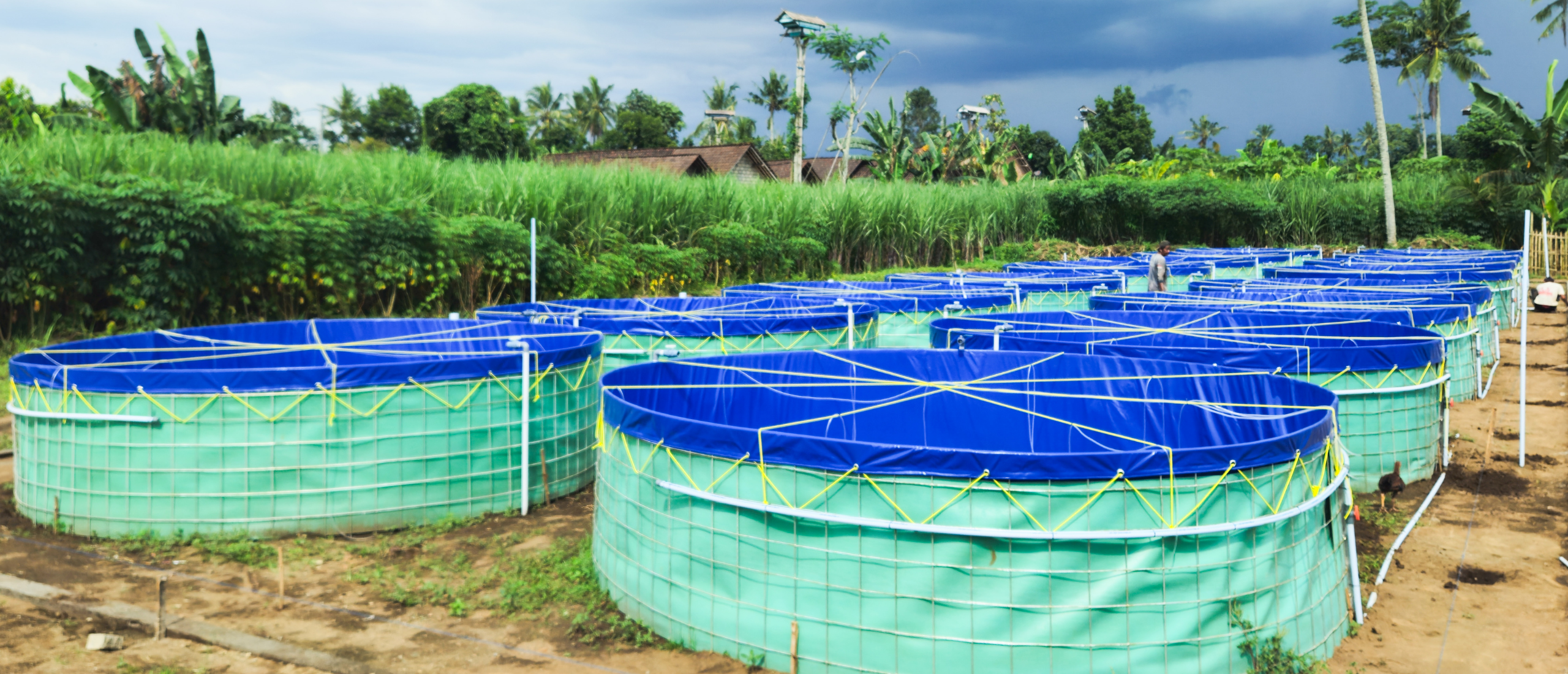
BioFloc Technology (BFT) is an aquaculture approach that uses microbial communities to transform, retain and recycle nutrients within the culture system. Instead of relying primarily on water exchange to remove waste, BFT systems aim to manage organic matter and nitrogen through biological processes occurring within the culture environment.
Biofloc Technology has attracted significant interest in intensive aquaculture because it can support low- or limited-water-exchange production while simultaneously creating microbial biomass that can contribute to nutrient recycling and, under suitable conditions, provide an additional nutritional resource for cultured animals.
However, Biofloc is much more than simply producing visible particles in the water.
A successful Biofloc system is a managed microbial ecosystem in which animals, microorganisms, carbon, nitrogen, oxygen, solids and water chemistry continuously interact.
The basic principle behind Biofloc Technology is relatively simple:
Feed → Waste → Microbial activity → Biofloc → Nutrient recycling
Feed entering an aquaculture system is not converted entirely into animal biomass. Nitrogen and organic matter are released into the culture environment through metabolism, feces and uneaten feed.
In a Biofloc system, microorganisms can transform a portion of these nutrients into microbial biomass.
Heterotrophic microorganisms can assimilate inorganic nitrogen when sufficient organic carbon is available, while other microbial processes, including nitrification, contribute to the transformation of nitrogen compounds.
The resulting microbial biomass, together with organic and inorganic particles, can form aggregates known as bioflocs.
These aggregates can contain combinations of:
The exact composition of a Biofloc community varies between systems and can change as environmental conditions and management practices change.
Biofloc Technology is based on managing several interconnected biological and physical processes.
Feed is the primary nutrient input in most aquaculture systems. Feed is added to the water to provide the cultured animals with energy and nutrients for growth, but it also introduces nitrogen and organic matter into the culture environment.
The animals consume the feed and convert a portion of its nutrient into biomass and growth.
Not all nutrients become animal biomass. Feces, metabolic waste, uneaten feed and other compounds enter the culture water.
Microorganisms use organic matter and nutrients as substrates for growth and metabolism, transforming compounds within the system.
Under suitable conditions, microbial biomass grows and microorganisms aggregate with organic and inorganic particles to form the bioflocs.
Bioflocs can be consumed by the cultured animal or broken down and transformed, allowing nutrients to be recycled within the system.
This is the fundamental concept behind nutrient recycling in BFT.
Microorganisms are at the center of Biofloc Technology.
A Biofloc system can contain a complex microbial community involving different organisms with different functions.
Heterotrophic bacteria use organic carbon as an energy and carbon source. Under suitable conditions, they can incorporate inorganic nitrogen into newly produced microbial biomass.
This process is one of the reasons carbon management is so important in many BFT systems.
Nitrifying microorganisms contribute to the biological transformation of ammonia toward nitrite and nitrate.
Nitrification is biologically different from heterotrophic nitrogen assimilation, and both processes can occur within the same Biofloc system.
In systems receiving sufficient light, algae and other photosynthetic organisms can become an important part of the microbial community and nutrient cycle.
Protozoa and other microorganisms participate in the microbial food web by interacting with bacteria, algae and organic particles.
The result is therefore not simply a tank containing "good bacteria."
Biofloc is a complex microbial ecosystem.
Carbon and nitrogen are fundamental to Biofloc management.
Feed introduces nitrogen into the system, while microorganisms require carbon for growth.
When sufficient readily available organic carbon is present, heterotrophic microbial growth and nitrogen assimilation can be stimulated. This is one of the fundamental mechanisms behind carbon-driven Biofloc systems.
This creates an important relationship:
Feed → Nitrogen input → Microbial demand → Carbon requirement
The C:N ratio is therefore an important management concept.
However, there is no single C:N ratio that guarantees a successful Biofloc system.
The appropriate carbon input depends on factors including:
Recent research also emphasizes that the type of carbon source can influence floc structure, microbial communities and system performance, meaning that carbon management is more complex than simply targeting a numerical C:N ratio.
Explore more:
→ C:N Ratio in Biofloc
→ Carbon Sources for Biofloc
→ How to Calculate Carbon Dosing
Oxygen is one of the most important resources in a Biofloc system.
Both the cultured animals and microorganisms consume oxygen.
As microbial biomass and organic loading increase, microbial oxygen demand can also increase.
Aeration therefore serves two essential functions:
Oxygen supply
and
Mixing and suspension of microbial biomass.
This makes aeration a fundamental part of Biofloc system design rather than simply an animal husbandry requirement.
A system with insufficient aeration may not have enough oxygen to support both the animals and the microbial processes required to maintain water quality.
Recent reviews identify constant aeration, appropriate tank design and water retention as important design considerations for BFT systems.
Explore more:
→ Dissolved Oxygen in Biofloc Systems
→ Biofloc Aeration
→ How Much Aeration Does Biofloc Need?
Biofloc Technology does not eliminate the need for water-quality management.
It changes how nutrients are managed within the system.
Important water-quality parameters include:
These parameters are interconnected.
For example, temperature affects both animal and microbial metabolism as well as oxygen solubility. pH and temperature influence the proportion of TAN present as un-ionized ammonia. Nitrification consumes alkalinity, which can influence buffering capacity and pH.
Therefore:
Water-quality parameters should be interpreted as a system, not as isolated numbers.
Explore more:
→ Biofloc Water Quality
→ Dissolved Oxygen
→ pH
→ TAN & Ammonia
→ Nitrite
→ Nitrate
→ Alkalinity
→ Suspended Solids
Suspended solids are a fundamental part of many Biofloc systems.
However:
More biofloc does not automatically mean a better system.
As microbial biomass and organic matter accumulate, suspended solids can increase.
Excessive solids can contribute to:
Recent reviews identify suspended solids and solids accumulation as important technical challenges in BFT.
This means Biofloc management is not simply about producing microbial biomass.
It is about maintaining the right amount and type of microbial biomass for the system's biological load.
Feeding is one of the strongest drivers of a Biofloc system.
Every feeding event introduces nutrients and organic matter.
Increasing feed can therefore increase:
Nitrogen input
↓
Organic loading
↓
Microbial activity
↓
Oxygen demand
↓
Potentially more microbial biomass and solids
This is why feeding cannot be managed independently from Biofloc management.
Farmers should consider:
A feeding table can provide a starting point, but the biological response of the actual system remains critical.
A new Biofloc system should be approached differently from a mature system.
During startup, microbial populations develop and the system begins establishing its biological capacity.
Farmers should consider:
The objective is not simply to make the water cloudy.
The objective is to establish a stable microbial community capable of processing the biological load placed upon the system.
Explore more:
→ How to Start a Biofloc System
→ Biofloc Technology Step-by-Step
→ Materials and Equipment for Biofloc Technology
Once established, a Biofloc system requires continuous management.
A farmer is simultaneously managing:
Animals + Microorganisms + Nutrients + Oxygen + Water Chemistry + Solids
The goal is to keep these components in balance.
Good Biofloc management therefore involves:
A single water-quality measurement rarely tells the entire story.
The trend is often more useful.
For example:
TAN increasing
may mean something very different depending on what has happened to:
Biofloc management is therefore fundamentally about cause and effect.
BFT has been studied across a range of aquaculture species, including shrimp and fish.
The technology is particularly prominent in the culture of Litopenaeus vannamei (Vannamei shrimp) and tilapia, among other species.
However, Biofloc systems are not interchangeable.
A:
Vannamei nursery
is different from a:
Vannamei grow-out system
and a:
marine shrimp system
is different from:
freshwater fish culture.
Differences in species, stocking density, feed, salinity, temperature, biomass and system design can all influence the microbial ecosystem and management requirements.
Biofloc Technology has several potential advantages.
These can include:
However, BFT also presents challenges.
These include:
Recent reviews continue to identify energy-efficient aeration, carbon-source optimization, solids management and system standardization as important areas for further development.
Biofloc should therefore not be viewed as a shortcut to easier aquaculture.
It is better understood as a different approach to managing the biological system.
Perhaps the most important concept in Biofloc Technology is the way the farmer thinks about waste.
In a conventional approach, the question may be:
How do I remove this waste?
In Biofloc, the question becomes:
How can this nutrient be safely transformed, recycled or removed within the system?
That does not mean waste should accumulate indefinitely.
It means the farmer actively manages the biological pathways through which nutrients move.
This changes the role of the farmer.
You are not simply managing shrimp or fish.
You are managing an interconnected ecosystem.
Animals.
Microorganisms.
Carbon.
Nitrogen.
Oxygen.
Solids.
Water chemistry.
All of these components influence one another.
This guide provides a broader introduction to the microbial ecosystem behind BFT, including how Biofloc works, the role of carbon and nitrogen, water quality, feeding, microbial processes, system stability and practical management.
From there, explore the specialized articles in the Biofloc Knowledge Base to dive deeper into individual aspects of Biofloc Technology.
Understand the biology. Measure the system. Manage the ecosystem.